Hi, I'm Jaganath

I design products your users can actually enjoy using.

Product Designer with 2.5 years of experience across B2B SaaS, AI, and data-heavy products. I enjoy taking messy problems, finding the signal, and turning them into products people can actually use.

Not everything here started with a wireframe.

I've always been curious about why some digital experiences just feel right. Long before I knew the term Product Design, I was interested in how products looked, behaved, and made people feel while using them.

That curiosity took me from Electrical Engineering into Product Design. In my last role, I worked across B2B SAAS platforms across recruitment and healthcarefor both mobile and web interfaces, solving complex workflows and designing experiences for different types of users.

Lately, I've been taking that curiosity a step further - using AI to prototype and build, and working on side projects like Peekzo and Pracster. I enjoy the process of taking an idea from a problem to something people can actually interact with.

I'm still figuring out where design ends and building begins - and that's probably the part I'm most excited about.


Portrait of Jaganath Kumar

People call me as JK, Jags or Jaggu (closest one) / Gamers call me as MrJB

So, how did I get here?

A little backstory on how I went from engineering to product design.

  1. THE BEGINNING

    Always drawing something

    I was always into sketching and creating things — long before I knew there was a career built around it.

  2. ENGINEERING

    Taking the technical route

    I chose Electrical Engineering, learning to think through problems, systems and how things work.

  3. THE SHIFT

    Something felt missing

    I enjoyed solving problems, but I found myself more interested in the people using the things I was building.

  4. PRODUCT DESIGN

    Finding the right fit

    That's when I discovered Product Design — a space where creativity, problem-solving and technology came together.

  5. NOW

    Designing. Exploring. Building.

    Today, I design digital products, experiment with AI, and build my own ideas to understand the product beyond the screen.

A few things from my Design Desk

(Selected work from my professional experience)

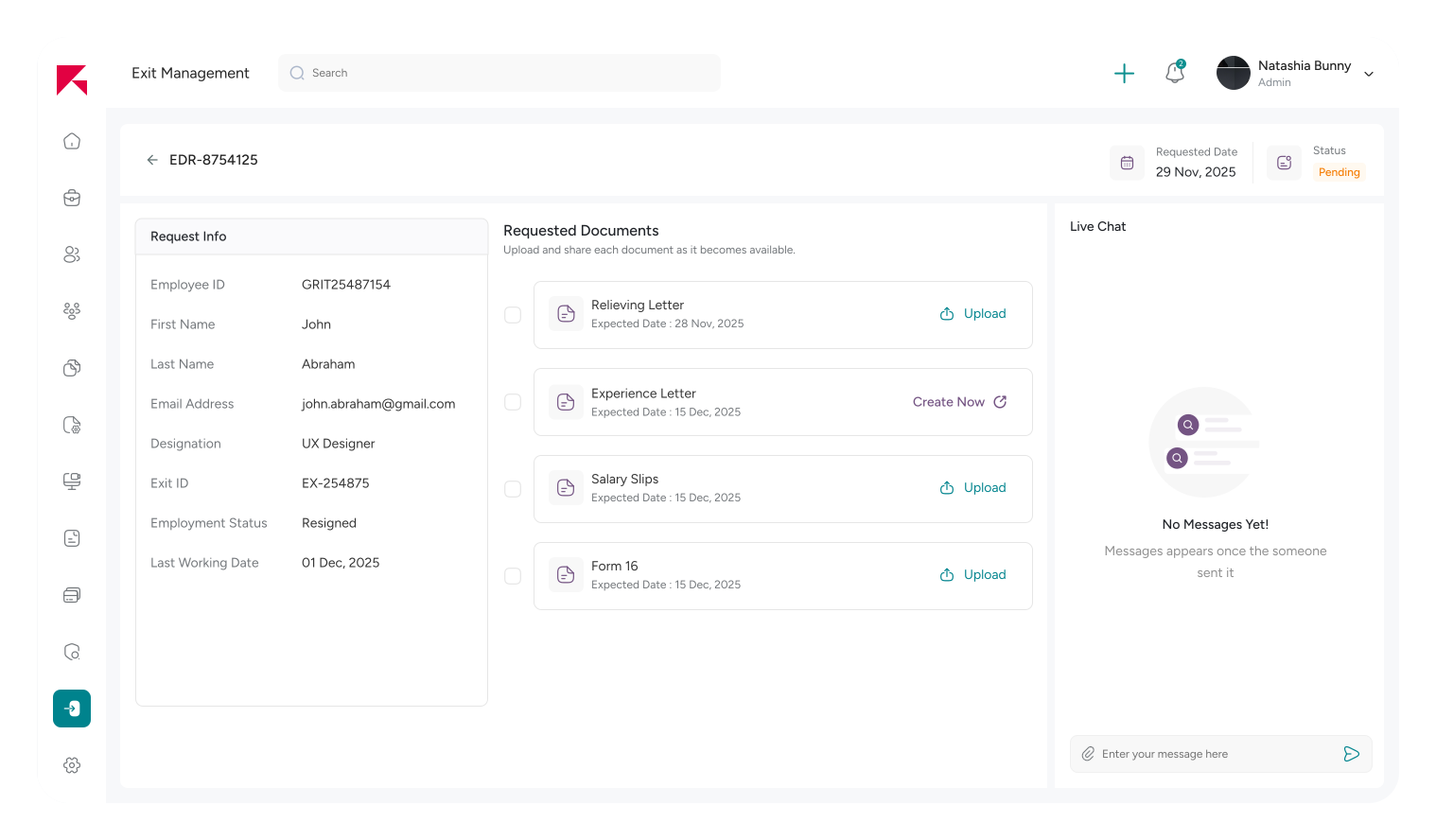
Exit management web dashboard showing request info and requested documents workflow

Simplifying Background Verification & Exit Management process from end to end

Q4 2025 — 3 Months

Reworked the Background Verification and Exit Management processes into a structured workflow where HR teams could manage requests, documents, and follow-ups in one placecutting email exchanges by 60–70%

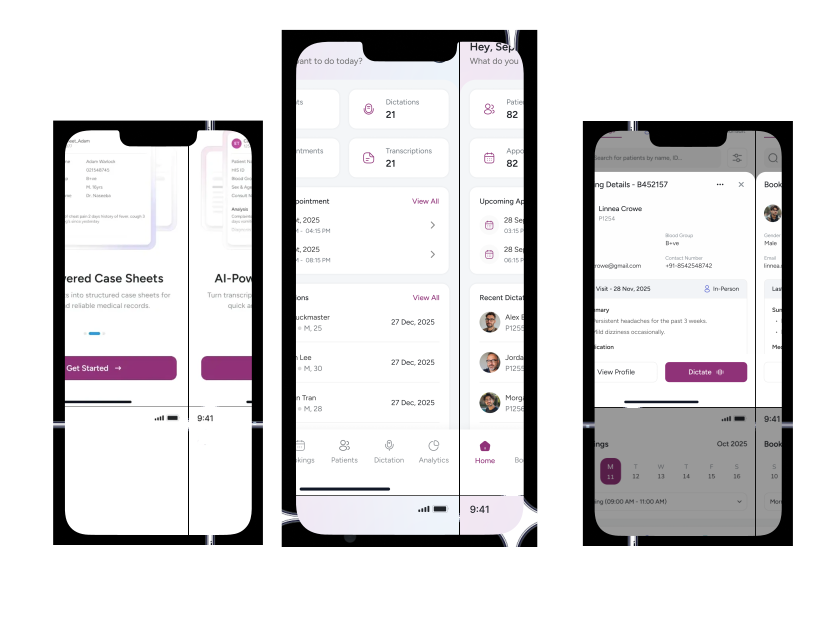
Healthcare mobile app on two phones showing dashboard metrics and booking details

90% of Doctors Requested Mobile Dictation for Clinical Documentation. We built the Missing Workflow.

Q1 2026 — 3 Months

Doctors often had to switch between the consultation and desktop-based documentation We brought the key parts of that workflow together into a mobile experience.

I usually have something I'm building

People often ask what keeps me busy outside work. Usually, it's another idea I want to try.

Coming SoonGoogle play closed testing phase
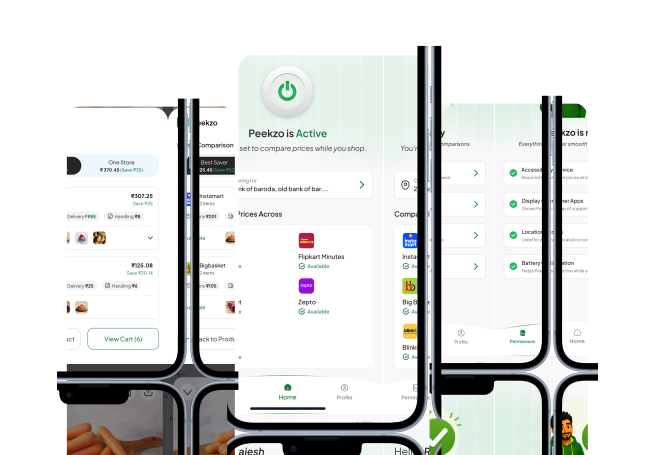
Peekzo — grocery price comparison app on three phone screens

Peekzo - A Smarter Way to Compare Grocery Prices

B2C · Android App

A smarter way to compare grocery prices across multiple delivery apps without switching between platforms. Peekzo brings prices from different stores into one simple comparison experience, helping users quickly find the best deal before placing their order.

Pracster — Learn Product Thinking by Playing

Web · Simulation game

What happens when your product decisions go live and shape real outcomes? Pracster turns product thinking into an interactive simulation where every decision has a consequence. Make strategic choices, respond to changing situations, and see how your decisions impact the business.

Tintora — Clarity in Every Color Decision

Figma Plugin

Design, test, and apply color systems with precision while keeping accessibility at the core. Tintora helps designers build, evaluate, and apply color systems directly within their UI workflow, making it easier to create consistent and accessible interfaces.